What if an ingredient’s value extends far beyond what we have learnt to do with it? What if the things we discard are resources we are yet to understand?
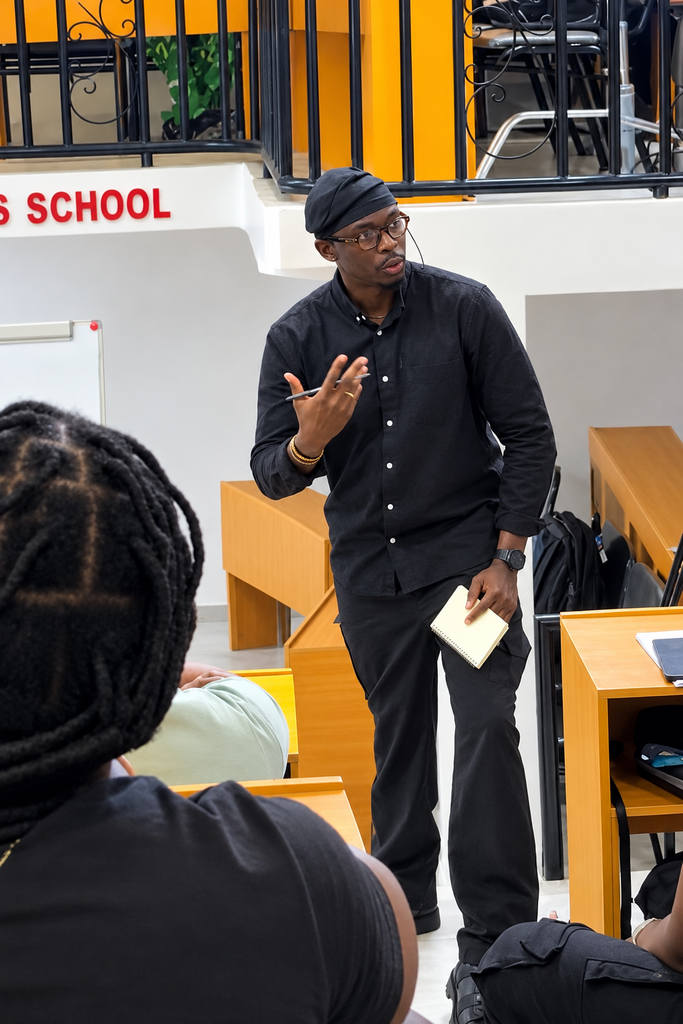
These were among the thought-provoking questions explored by Chef Kwame Asie, a travel chef and food archivist, during an insightful session at the Eko Flavours Season 3 bootcamp for the Top 25 contestants at Hospitality Business School on Friday.
He challenged the contestants to look beyond the act of cooking and explore the deeper stories behind the food we eat, highlighting how a better understanding of ingredients can unlock new possibilities for culinary creativity and sustainability.
Understanding the Story Behind Every Ingredient
For Chef Kwame, an ingredient is only the beginning. Truly understanding food requires knowing its origins, the communities that use it and the different possibilities it holds.
Drawing from his travels across different countries, he demonstrated how a single plant or ingredient can take on different forms, uses and meanings across cultures, creating opportunities to prepare diverse dishes from the same source.
Recalling his recent experience in Gabon, where he encountered Odika, a dish that reminded him of Nigeria’s familiar ogbono-based cuisine, Chef Kwame illustrated how exploring food across borders can reveal similarities between culinary traditions.
His examples encouraged the contestants to broaden their culinary perspectives, embrace cultural exchange and recognise that there is often more than one way to understand and use an ingredient.
The Journey from Soil to Plate
The session also explored how culinary knowledge extends beyond the ingredient itself.
Chef Kwame highlighted the importance of understanding how soil and climate influence food production, while emphasising the value of seasonality, responsible sourcing, preservation and proper storage.
Through his experiences, he encouraged the contestants to develop a deeper appreciation for the origins of their ingredients and the stories they carry. He urged them to consider the entire journey of food, from where it grows to how it is sourced, handled, prepared and eventually served.
This approach reinforces the idea that culinary excellence begins long before an ingredient reaches the kitchen. Understanding its journey can help chefs make more informed decisions, reduce unnecessary waste and maximise the value of the resources available to them.
Rethinking Waste: The Possibilities We Overlook
One of the most striking lessons from the session was Chef Kwame’s perspective on waste.
What one person or community discards may be valued, repurposed or put to use elsewhere. By encouraging the contestants to look beyond conventional uses for ingredients and reconsider what is often overlooked, he connected culinary creativity to the principle at the heart of Eko Flavours Season 3: Nothing Wasted.
His message challenged the contestants to question familiar practices and explore alternative ways to use ingredients that might otherwise be thrown away.
This perspective highlights an important opportunity within the culinary industry: reducing food waste requires more than changing disposal habits. It also requires knowledge, curiosity and a willingness to discover new uses for what is already available.
When chefs understand the full potential of their ingredients, they can begin to transform overlooked resources into opportunities for innovation.
Innovation Begins with Understanding
Beyond creativity and sustainability, the discussion reinforced the importance of food safety, understanding allergies and mastering techniques that allow ingredients to be handled and utilised responsibly.
Chef Kwame emphasised that innovation begins with understanding. Chefs must remain curious, be willing to learn and explore unfamiliar approaches rather than be afraid of failure.
This mindset is particularly important for emerging culinary professionals, who must balance experimentation with responsible food handling and a strong understanding of their craft.
For the Top 25 contestants, the session offered an opportunity to reflect on how knowledge, cultural awareness and technical skill can influence their approach to cooking and the wider food industry.
More Than Cooking: A New Perspective on Food
For the Eko Flavours Season 3 contestants, Chef Kwame Asie’s session served as a valuable reminder that being a chef involves more than preparing a delicious meal.
It requires an appreciation of heritage, an understanding of ingredients, a willingness to explore and the ability to recognise possibilities where others might see limitations.
As the contestants continue their journey through the bootcamp, these lessons offer a broader perspective on what it means to cook responsibly and creatively.
Because sometimes, the difference between waste and an opportunity lies in how much we know about what we have.
And that is the thinking behind Eko Flavours Season 3: Nothing Wasted.